🏡 August 2026 Market Update 📊
🏡 August 2026 Market Update 📊
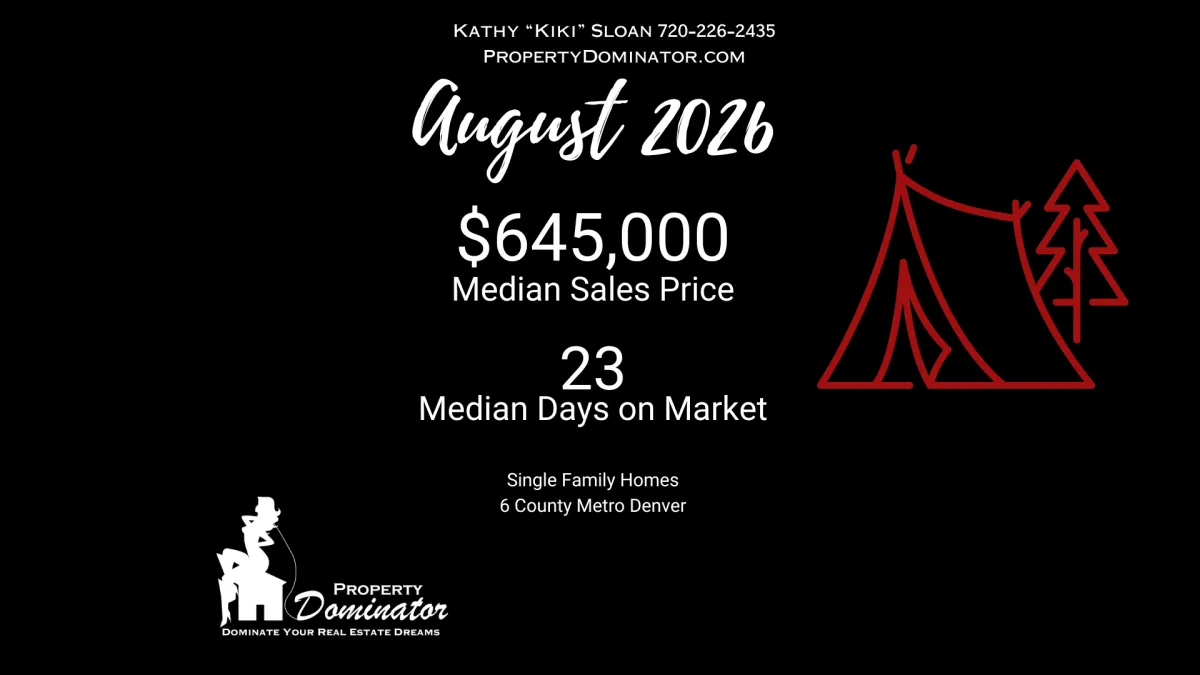
Prices: The median sales price in August 2026 came in at $645,000, down from $659,000 in July and $671,500 in June. That means prices have declined $26,500, or about 3.9%, since June’s seasonal high.
This downward movement is consistent with the summer slowdown we typically see after the spring selling season. Buyers are gaining more choices and negotiating power, making strategic pricing increasingly important for sellers.

Days on Market: Median Days on Market jumped to 23 days in August, up from 17 days in July, 14 days in June, and just 10 days at the spring low in April. That is a significant change in the pace of the market, and it’s also typical for our annual cycle with seasonal changes.
August homes took more than twice as long to sell as they did at the spring peak. However, the market is still moving faster than last year’s August, when median Days on Market reached 27 days. Buyers have more breathing room, while sellers need to recognize that simply putting a home on the market is no longer enough to generate immediate results.

The summer slowdown is here. Buyers have more leverage, more time to make decisions, and potentially more opportunities to negotiate on price, concessions, or other contract terms. Sellers can still achieve strong results, but pricing correctly from day one, preparing the home properly, and creating a strong first impression matter more now than they did in the spring. Homes that miss the mark on price or condition risk sitting longer as buyers become increasingly selective.
Year Over Year Comparison
Compared to August 2025, when the median sales price was approximately $640,000, August 2026 remains about $5,000 higher. However, August 2026 is below August 2024, when the median was approximately $656,500.
That puts the current market in an interesting position: prices are still holding slightly above last year, but the gap has narrowed considerably as we move through summer. Rather than signaling a dramatic decline in values, the data shows a market moving through its normal seasonal correction while affordability and increased buyer choice put pressure on sellers.
Month Over Month Comparison

The Denver metro single-family market is showing a clear late-summer shift. After reaching a median sales price of $671,500 in June, prices declined to $659,000 in July and $645,000 in August, a drop of $26,500 from the early-summer high. At the same time, Median Days on Market increased from 14 days in June to 17 in July and 23 in August, giving buyers noticeably more time and negotiating power. This combination of declining prices and longer market times signals that the intense spring and early-summer competition has eased.
Buyers are becoming more selective, and homes that are overpriced or poorly presented are more likely to sit. For sellers, pricing correctly from day one is becoming increasingly important, because chasing the market with later price reductions can mean losing valuable time and leverage. For buyers, this shift may create opportunities to negotiate price, concessions, repairs, or other favorable terms. The market hasn't stopped moving, but the advantage is shifting, and strategy matters more now than it did just a few months ago.
As we head into September and fall, seasonal patterns suggest we will see a pop of activity in October, then prices will continue to soften and Days on Market continue to rise until 2027’s spring season begins - likely in February. That doesn't mean buyers should automatically expect huge discounts or sellers should panic. It means we're entering a more balanced and increasingly strategic market. Sellers need to compete for buyers rather than simply wait for buyers, while buyers may find opportunities that weren't available during the fast moving spring market.
When Should I Buy??
The best answer, especially if you don't already own real estate, is that you should buy what you can afford as soon as you are preapproved for a mortgage. This first step into real estate is often NOT to buy your dream home. Rather, you are entering the market so you can leverage it to buy your dream home in another few years.
Your starter home acts as a savings account towards your dream home in 2 ways: the equity you build by paying down the loan balance and the the equity you build through the home's appreciation in value. Your equity and regular savings will get you into your dream home much faster than savings alone.
In the graph below, you can see how people in the US who don't own real estate don't have any net worth to speak of, while those who own a home typically have about $200-400k in net worth.