🏡 February 2026 Market Update 📊
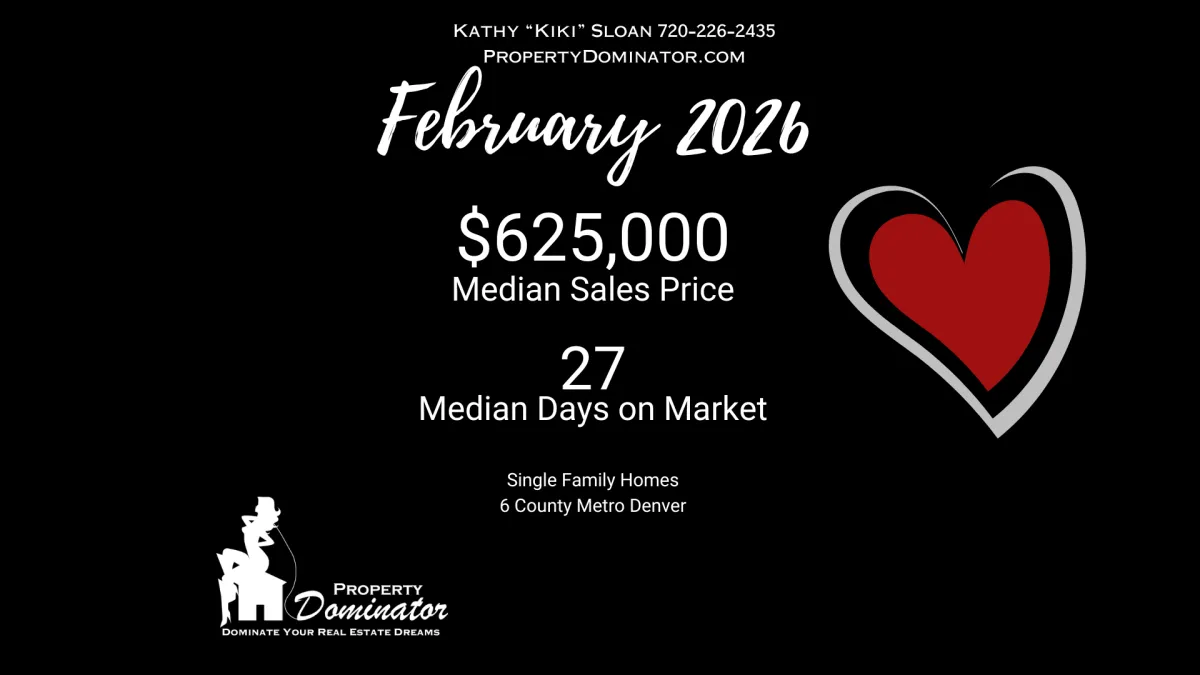
Prices: The median sales price in February 2026 reached $625,000, up from $612,750 in January. This kind of early-year increase is typical as the market transitions from the slower winter months into the early stages of the spring buying season, which usually runs from February through May in the Denver metro market.
As buyer activity begins to increase, even a modest rise in prices can signal that demand is starting to strengthen after the seasonal winter slowdown.
While prices are still below the peak levels we typically see in late spring and early summer, this month-to-month increase suggests that buyer interest is beginning to return. If this pattern continues, we may see further price movement upward in the coming months as inventory grows and competition gradually increases.

Days on Market: Market pace shifted noticeably this month. Median Days on Market dropped to 27 days, down significantly from 49 days in January. That’s a substantial change in a short period of time and reflects the typical seasonal transition as the market moves out of the slower winter months and into the early stages of the spring buying season.
This sharp drop suggests that buyer activity is picking up and homes are beginning to move more quickly. As more buyers re-enter the market, properties that are well-prepared, thoughtfully priced, and located in desirable neighborhoods tend to attract stronger interest and go under contract faster.
While the market is not overly competitive yet, the reduction in days on market signals that momentum is building and the pace of the market is beginning to accelerate.

Momentum is beginning to build in the Denver metro housing market. Buyers who were sitting on the sidelines during the winter months are starting to re-enter the market, and activity is picking up as we move closer to the spring buying season. As a result, competition is gradually increasing and homes are beginning to move more quickly than they did just a month ago.
For sellers, this shift means preparation and strategy matter. Homes that are well-prepared, thoughtfully priced, and presented well are attracting more attention and moving under contract faster. While the market is not in the intense bidding-war environment we saw in past years, it is clearly becoming more active as seasonal demand returns.
Year Over Year Comparison
Compared to February of last year, the Denver metro single-family market remains relatively balanced. While prices and activity naturally fluctuate from month to month, the broader trend shows that home values have remained resilient and buyer demand continues to support the market. Homes are still selling at a healthy pace, and the reduction in days on market this month suggests that buyers are actively engaging as the spring season approaches. Rather than showing signs of a sharp shift in either direction, the data points to a market that is stable and functioning normally, with steady demand and typical seasonal patterns driving activity.
Month Over Month Comparison

Looking at the month-to-month trend from December 2025 through February 2026, the Denver metro single-family market is showing a clear shift as the spring season begins to take shape. The median sales price moved from $620,000 in December to $612,750 in January, then rebounded to $625,000 in February, suggesting the brief January dip was largely seasonal. At the same time, median days on market jumped to 49 days in January during the slower winter period, but then dropped sharply to 27 days in February, signaling a meaningful increase in buyer activity. This combination of rising prices and faster selling times typically indicates the market is transitioning out of winter slowdown and into the early stages of the spring buying season, when demand begins to strengthen and well-priced homes start moving more quickly.
When Should I Buy??
The best answer, especially if you don't already own real estate, is that you should buy what you can afford as soon as you are preapproved for a mortgage. This first step into real estate is often NOT to buy your dream home. Rather, you are entering the market so you can leverage it to buy your dream home in another few years.
Your starter home acts as a savings account towards your dream home in 2 ways: the equity you build by paying down the loan balance and the the equity you build through the home's appreciation in value. Your equity and regular savings will get you into your dream home much faster than savings alone.
In the graph below, you can see how people in the US who don't own real estate don't have any net worth to speak of, while those who own a home typically have about $200-400k in net worth.