🏡 January 2026 Market Update 📊
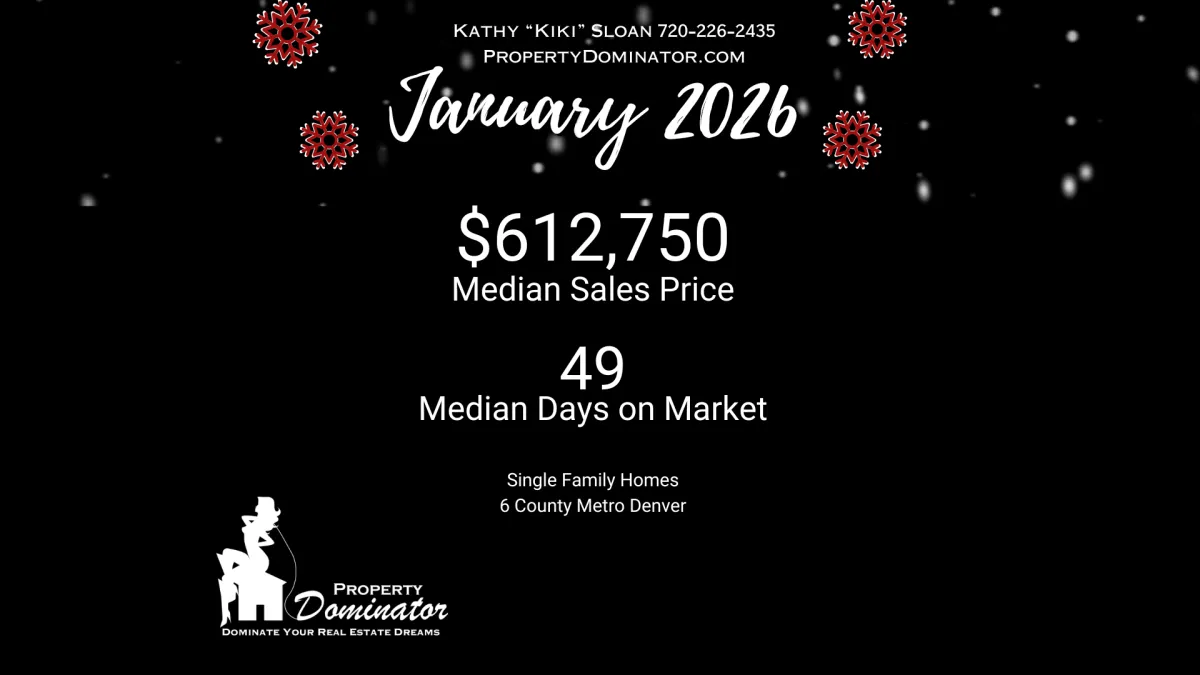
Prices: The median sales price for single-family homes in January 2026 came in at $612,750.
That’s down from late 2025, which is exactly what we typically see this time of year. If you look at the last several years, prices tend to peak in late spring or early summer, soften through fall, and dip in winter. This is not a crash, this is seasonality.
The bigger takeaway? Even with fluctuations, we are still dramatically above pre-2020 price levels. The long-term trend remains intact.

Days on Market: Median Days on Market jumped to 49 days in January. That is a significant slowdown compared to peak spring months. Buyers are taking their time. They are comparing options. They are negotiating.
This is a patient market. And honestly? It’s a healthier one.

Price Reductions & Concessions: January 2026’s increase to 49 median days on market tells you exactly what’s happening with price reductions and concessions. When homes are taking longer to go under contract compared to the spring and early summer months, sellers start adjusting. That typically shows up first as price reductions. The longer a listing sits, the more likely it is to reposition.
Concessions tend to follow the same pattern. In a slower winter market, sellers are more willing to offer credits toward closing costs or rate buy-downs to get deals done rather than chase the market down with multiple price cuts. Clean, well-priced homes can still move without heavy givebacks, but anything dated, overpriced, or competing in a crowded price band will likely need to offer incentives to secure a contract. This is not distress. It is balance returning. Strategy matters more than ever.
Year Over Year Comparison

Looking at this year-over-year comparison for January single-family homes in the 6-county Denver metro, the story is subtle but important. Median price moved from $625,000 in January 2024 to $630,000 in January 2025, then dipped to $612,750 in January 2026. That is not a crash. It is a normalization after several years of aggressive appreciation. At the same time, median days on market climbed from 36 days in 2024 to 41 days in 2025, and now 49 days in 2026. Prices have softened slightly while time on market has steadily increased, signaling buyers are taking longer to commit and gaining negotiating leverage.
The bigger takeaway is pace, not panic. Homes are still selling, but they are not flying off the shelf like they did during the ultra-low interest rate years. Sellers who price accurately from day one are still finding success, while those testing the market are seeing longer timelines and more negotiation. This shift reflects balance returning to the market, not instability. The data shows a slower, more methodical environment where preparation, pricing strategy, and presentation matter more than ever.
Month Over Month Comparison

Looking at the month-over-month comparison from November 2025 to January 2026, we see a clear seasonal slowdown. Median price moved from $630,000 in November down to $620,000 in December, then dipped slightly again to $612,750 in January. That gradual softening aligns with typical winter seasonality, not market distress. At the same time, median days on market climbed from 32 days in November to 41 days in December, and now 49 days in January. Homes are taking over two weeks longer to go under contract compared to late fall, signaling reduced urgency from buyers.
The key takeaway is momentum. As activity slows during the holidays and early winter, buyers gain leverage and sellers need sharper pricing strategy. This pattern mirrors what we typically see at year-end in Denver metro: prices ease slightly and timelines stretch before the spring market reactivates demand. The data suggests January is behaving like a seasonal low point, not a structural downturn. If history repeats, February and March will tell us how quickly the spring rebound kicks in.
When Should I Buy??
The best answer, especially if you don't already own real estate, is that you should buy what you can afford as soon as you are preapproved for a mortgage. This first step into real estate is often NOT to buy your dream home. Rather, you are entering the market so you can leverage it to buy your dream home in another few years.
Your starter home acts as a savings account towards your dream home in 2 ways: the equity you build by paying down the loan balance and the the equity you build through the home's appreciation in value. Your equity and regular savings will get you into your dream home much faster than savings alone.
In the graph below, you can see how people in the US who don't own real estate don't have any net worth to speak of, while those who own a home typically have about $200-400k in net worth.